Orlando attics create unique vulnerabilities for structural rodent activity because elevated humidity and architectural soffit junctions invite tree-dwelling pests indoors. In communities like Baldwin Park and College…
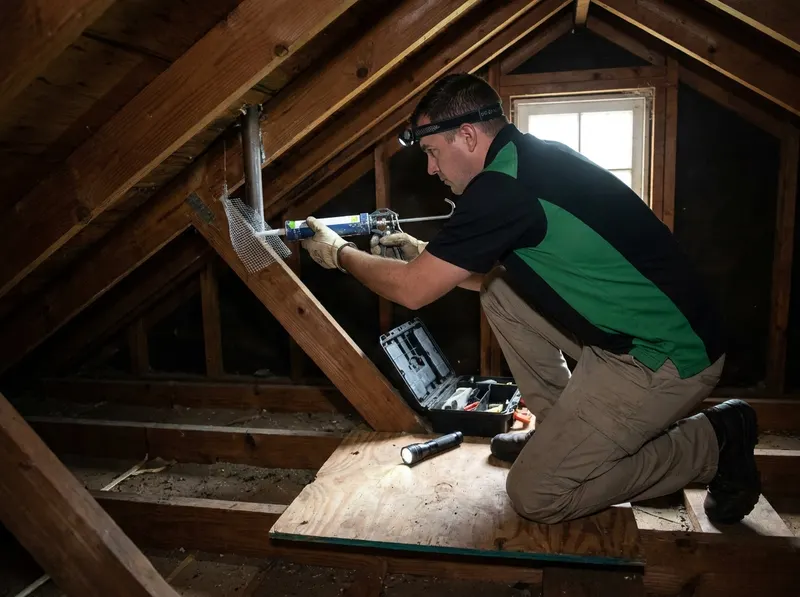
Orlando attics create unique vulnerabilities for structural rodent activity because elevated humidity and architectural soffit junctions invite tree-dwelling pests indoors. In communities like Baldwin Park and College Park, mature oak canopies offer direct aerial highways for *Rattus rattus* (roof rats) to access roof valleys, ridge vents, and construction gaps along fascia boards. Unsealed barrel tiles common in Dr. Phillips and MetroWest homes also present natural entry arches that permit rodents to nest directly within blown fiberglass or cellulose insulation. Once established, rodents soil attic spaces with biological urine markers and fecal pellets, which airborne duct systems can pull into living spaces below, degrading indoor air quality.
FreshGuard Extermination executes rodent remediation through physical exclusion rather than interior poison baits that leave carcasses inside walls. Exclusion utilizes weather-resilient materials like 1/4-inch 23-gauge hardware cloth, metal flashing, and elastomeric sealants conforming to ASTM International standards for building envelope integrity. Technicians secure exterior junctions, plumbing vent stacks, and soffit vents without trapping toxic gases, aligning with airflow specifications established by the Home Ventilating Institute. Homeowners weighing simple trap placement against whole-structure exclusion trade low upfront pricing for recurrent structural re-entry; physical sealing stops the biological access loop permanently, whereas traps merely cull passing populations.
Decontamination follows strict biosafety protocols to eliminate health hazards caused by zoonotic pathogens. Technicians remove damaged insulation under negative air pressure using high-efficiency particulate air equipment certified under U.S. Environmental Protection Agency guidelines. The attic substrate is subsequently treated with an atomized botanical disinfectant registered by the Florida Department of Agriculture and Consumer Services to neutralize bacteria, roundworms, and ectoparasites like rodent mites without introducing synthetic volatile organic compounds. This approach protects households, guest hygiene in Avalon Park vacation rentals, and sensitive residents in Lake Nona from corrosive airborne irritants.
Restoration finishes by establishing thermal resistance values compliant with regional recommendations from the U.S. Department of Energy, typically targeting R-38 levels for Central Florida attics. If ductwork sustained physical gnawing, sealing practices align with standards from the Air Conditioning Contractors of America and the International Training Institute to restore HVAC efficiency. Structural waste and bio-soiled insulation are handled and processed according to municipal transfer guidelines governed by the Florida Department of Environmental Protection and transported via authorized haulers compliant with the Federal Motor Carrier Safety Administration. For questions or scheduling, property owners contact the local office directly at (689) 268-7844.
Every job gets a firm, written price after a free on-site visit.
For standards, safe disposal, and service guidance on pest control services in Orlando, FL, useful references include U.S. EPA, ENERGY STAR, U.S. Dept. of Energy, Consumer.gov, U.S. Census Bureau, and Google Maps. General consumer and small-business resources are available from USA.gov, Better Business Bureau, FTC Consumer Advice, U.S. Small Business Administration, and Ready.gov.
Tell us about your attic rodent exclusion & decontamination job in Orlando and we'll send a clear, written quote, usually the same day.
 FreshGuard Extermination