Orlando residential environments support continuous ectoparasite reproduction due to an average relative humidity exceeding 74% and warm soil temperatures across Orange County. Subtropical moisture allows flea eggs and…
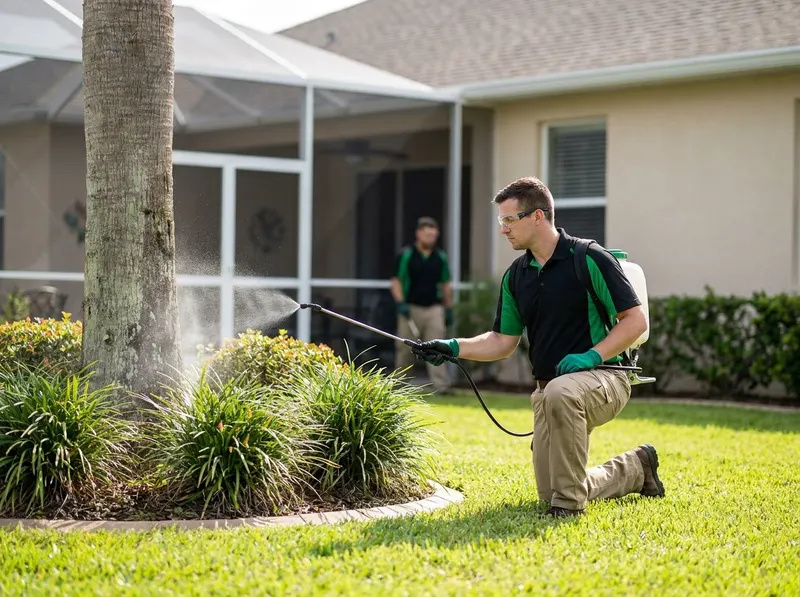
Orlando residential environments support continuous ectoparasite reproduction due to an average relative humidity exceeding 74% and warm soil temperatures across Orange County. Subtropical moisture allows flea eggs and tick larvae to survive outdoors year-round in shaded St. Augustine turf and pine straw bedding.
Standard over-the-counter pyrethrin perimeter sprays frequently fail because they degrade rapidly under frequent afternoon downpours and do not affect the pupal stage, where pre-emerged adults remain insulated inside protective silk cocoons for up to 140 days.
Outdoor moisture dynamics dictate our targeted barrier protocol. Rather than spraying non-targeted, high-toxicity broad-spectrum chemicals, treatment establishes clean-barrier zones using specialized microencapsulated formulations bonded with juvenile hormone mimics that adhere to outdoor foliage despite heavy rain.
edu/">University of Florida IFAS Extension, successful eradication requires arresting the development of immature larvae before chitin hardening occurs. In areas like Lake Nona, Avalon Park, and Delaney Park, high foot-traffic yards and community dog paths expose pets to tick questing behavior, where nymphs climb blades of grass along fence lines. gov/ticks/">Centers for Disease Control and Prevention indicate that habitat reduction and targeted acaricide bands substantially reduce tick densities near residential perimeters.
Indoor remediation follows clinical protocols designed to protect indoor air quality while eliminating embedded larval reservoirs. In slab-on-grade homes common throughout Dr. Phillips, Audubon Park, and MetroWest, carpet tack strips, tile grout lines, baseboard junctures, and upholstered furniture edges harbor organic debris that nourishes developing flea larvae.
gov/pesticides">US Environmental Protection Agency outlines integrated pest management principles that pair non-volatile insect growth regulators with precise application equipment. Homeowners complete a thorough pre-treatment preparation, vacuuming all rug piles and laundering pet bedding at 140°F, which encourages adult fleas to emerge from the pupal matrix so that our low-toxicity botanical barriers eliminate them on contact.
Deciding between basic retail spot treatments and complete environmental eradication depends on whether an infestation is acute or multi-generational.
If pests have spread into baseboard crevices or multiple outdoor zones, localized aerosol cans leave up to 85% of the immature population untouched, causing recurring emergence within 14 days. The environmental eradication protocol coordinates simultaneous interior and exterior intervention: interior treatments suppress reproductive maturation on flooring surfaces, while exterior bands stop constant reintroduction from passing wildlife. The functional trade-off involves preparation rigor: successful eradication requires occupants and pets to vacate the property for 3 to 4 hours to allow microencapsulated barriers to dry fully, followed by mandatory daily vacuuming over a 14-day window to pull pupae out of dormancy.
org/">Companion Animal Parasite Council. For direct operational planning, property owners contact (689) 268-7844 to schedule an on-site evaluation.
Every job gets a firm, written price after a free on-site visit.
For standards, safe disposal, and service guidance on pest control services in Orlando, FL, useful references include U.S. EPA, ENERGY STAR, U.S. Dept. of Energy, Consumer.gov, U.S. Census Bureau, and Google Maps. General consumer and small-business resources are available from USA.gov, Better Business Bureau, FTC Consumer Advice, U.S. Small Business Administration, and Ready.gov.
Tell us about your flea & tick environmental eradication job in Orlando and we'll send a clear, written quote, usually the same day.
 FreshGuard Extermination